Unlike general liability, which protects you from claims made by others, commercial property insurance protects what you actually own and use to operate. For any business with a physical location, equipment, or inventory, it is one of the most fundamental policies you can carry
What Is Commercial Property Insurance?
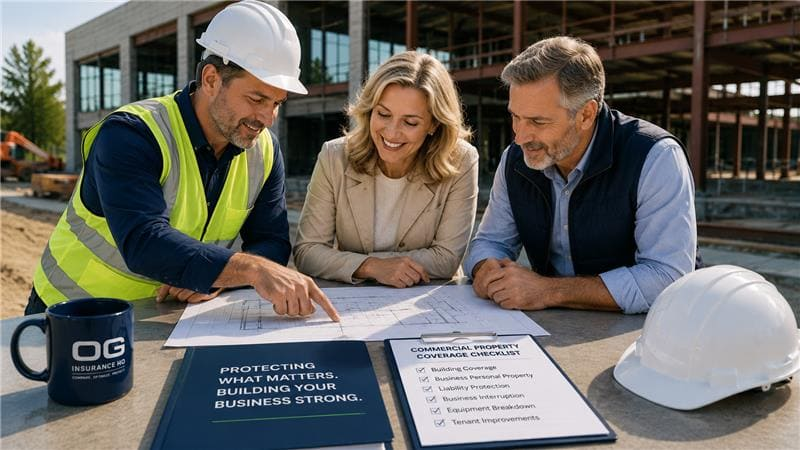
Commercial property insurance covers the physical assets your business owns or uses, protecting against losses from events like fire, windstorms, theft, vandalism, and certain types of water damage. Depending on your policy, coverage typically includes:
- The building itself, if you own it, including structural elements and permanently attached fixtures
- Business personal property, such as furniture, computers, tools, and equipment
- Inventory and stock, whether raw materials or finished goods ready for sale
- Outdoor signage, fencing, and other exterior business property
- Tenant improvements, if you have invested in upgrading a leased space
- Loss of use or additional expenses incurred while repairs are underway
Commercial property insurance can be purchased as a standalone policy or bundled into a Business Owners Policy alongside general liability and business interruption coverage.
Why Commercial Property Insurance Matters
The numbers behind property losses are sobering. Fires, severe weather events, and theft each year cause billions of dollars in commercial property damage across the United States, and many small businesses that suffer a major uninsured property loss never fully recover. Replacing a commercial kitchen, restocking a damaged inventory, or rebuilding a storefront after a fire can easily run into six figures, even for a modest-sized operation.
Commercial property insurance is what allows a business to absorb that kind of shock and keep operating, rather than closing permanently. It is the difference between a bad month and a business-ending event.
Real World Example
A family-owned hardware store experienced a severe roof leak during a spring storm that went unnoticed over a holiday weekend. By the time staff returned, water had damaged a significant portion of the store’s inventory, several display fixtures, and a section of drywall and flooring. The total claim, covering inventory replacement, structural repair, and fixture replacement, came to approximately $87,000. Because the store carried commercial property coverage with adequate limits, the claim was paid in full after the standard deductible, and the store reopened within three weeks. Had the owner been underinsured, the out of pocket cost would have forced the business to take on significant debt or close several departments permanently.The store’s commercial property policy cost a fraction of the $87,000 claim it covered — and kept the doors from closing for good.
Who Needs Commercial Property Insurance?
Commercial property insurance is essential for any business that owns or leases a physical space, equipment, or inventory, including:
- Retail stores, boutiques, and showrooms
- Restaurants and food service operations with significant kitchen equipment
- Manufacturing and light industrial operations
- Professional offices with computers, furniture, and equipment
- Warehouses and distribution operations holding inventory
- Salons, gyms, and personal service businesses with specialized equipment
If a fire, storm, or theft would meaningfully damage your operation’s ability to function, commercial property coverage belongs in your policy lineup.
Common Commercial Property Claims
The most frequent commercial property claims include:
- Fire damage to the building, equipment, or inventory
- Water damage from storms, burst pipes, or roof failures
- Wind and hail damage to roofing, signage, and exterior structures
- Theft or vandalism of equipment, inventory, or fixtures
- Smoke damage from a nearby fire or equipment malfunction
- Damage caused by falling objects, such as trees during a storm
What Affects Commercial Property Insurance Costs?
Commercial property premiums are influenced by your building’s construction type and age, your location’s exposure to severe weather, theft, or fire risk, the total value of your insured property, your industry’s specific risk factors, and your claims history. A wood-frame restaurant with a commercial kitchen in a coastal region will carry a different rate than a brick office building inland with minimal equipment, even at similar overall coverage limits.
Because commercial property is most often purchased as part of a Business Owners Policy, the combined average BOP premium of roughly $83 per month, according to Insureon data, gives a useful benchmark, though standalone commercial property costs vary significantly based on the value and type of property being insured.
Making Sure Your Coverage Limits Match Your Real Risk
One of the most common and costly mistakes business owners make is underinsuring their property, often because limits were set years ago and never updated as the business grew. If your equipment, inventory, or improvements have increased in value since your policy was last reviewed, your coverage limits may no longer reflect what it would actually cost to rebuild or replace everything you own. A periodic review of your property values, ideally every renewal cycle, is the simplest way to avoid a painful gap between what you thought was covered and what a claim actually pays out.
Frequently Asked Questions
Why Businesses Choose OG Insurance HQ
Your physical assets represent years of investment, and a generic policy is not enough to protect them properly. OG Insurance HQ uses advanced analytics to evaluate your property’s true replacement value, optimize your coverage limits to close any gaps, and protect the physical foundation your business depends on. Compare. Optimize. Protect.