Review auto insurance options for your vehicles, drivers and budget with OG Insurance HQ.
Share the details you have available. An agent will review your request.
Submitting a request starts an agent review and does not bind coverage.
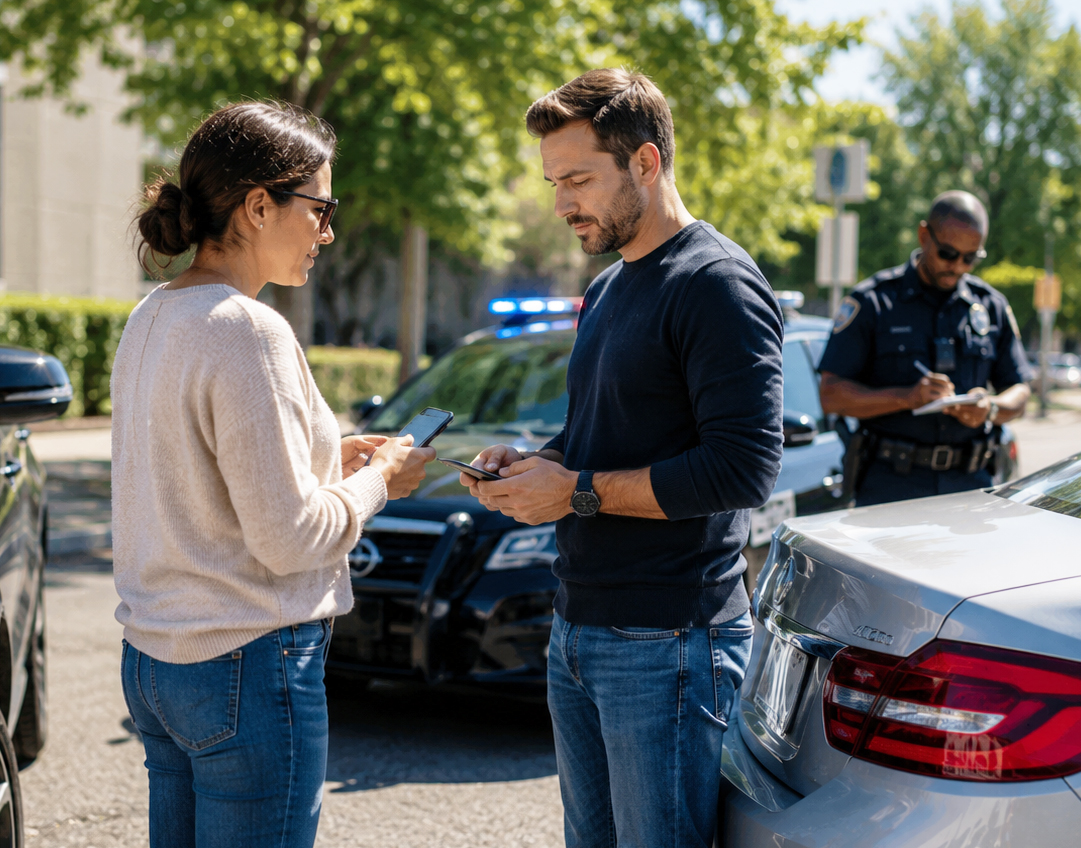
Picture this. You’re driving home on the interstate when a distracted driver rear-ends you. Your car is totaled and your shoulder is fractured. The other driver carries only the state minimum, and so do you.
Example for illustration only.
The other driver’s minimum limit pays part of your hospital bill, and the rest is on you, along with the paychecks you miss while you recover. If your uninsured and underinsured motorist coverage is too low, it can’t fill that gap. This is a hypothetical example, but it’s one of the most common ways people find out they were underinsured.
States Licensed
Top Carriers Shopped
Agent Reviews Every Request
To Compare Multiple Carriers
Cost to Compare
Pays for medical bills and lost wages of other people when you cause an accident. Required in almost every state. Your BI limit is shown as two numbers, like 25/50, meaning $25K per person / $50K per accident.
Marcus rear-ended another driver on I-285 in Atlanta. The other driver’s hospital bill was $32,000. Marcus had 25/50 BI limits, so insurance paid up to $25K. Marcus paid the remaining $7K out of pocket.
State minimums are almost always too low for real accidents. OG recommends at least 100/300, it often costs less than $15/month more.
Covers damage you cause to someone else’s car, fence, mailbox, or structure. Required in all states. A $10K PD limit sounds like a lot, until you hit a new truck.
Repairs on a newer car with sensors and cameras can cost far more than a low property damage limit covers.
OG recommends $100K PD.
Pays to repair or replace YOUR vehicle after an accident, regardless of who’s at fault. Subject to your deductible. Required by lenders on financed vehicles.
You slide on ice and hit a guardrail. No other car involved. Without collision, you pay 100% of repairs. With $500 deductible collision, you pay $500. Insurance covers the rest.
If your car is worth under $3,000, collision may not be worth the premium. OG agents run the numbers for you.
Covers non-collision damage: theft, vandalism, hail, flooding, deer strikes, falling objects, fire. Also subject to your deductible.
A hailstorm in Dallas totaled 3 vehicles on one block in 20 minutes. Comprehensive paid for all three. None of those drivers were “at fault.”
Comprehensive is almost always worth it. Deductibles of $500–$1,000 keep premiums low while protecting against total loss scenarios.
Protects you when the at-fault driver has no insurance or not enough insurance. Millions of drivers on the road are uninsured, and the share is much higher in some states.
Marcus was rear-ended by a driver with only $10K in BI coverage. His hospital bill was $14K. Marcus’s UM/UIM coverage paid the $4K gap.
UM/UIM is the coverage that protects you from other people’s bad decisions. OG considers this non-negotiable.
Pays your medical bills and your passengers’ medical bills after an accident, regardless of fault. Works alongside your health insurance. No deductible on MedPay (varies by carrier).
Your passenger breaks their wrist in your car. Your health insurance has a $2,500 deductible. MedPay covers that deductible so you’re not paying out of pocket for someone else’s ER visit.
MedPay is inexpensive and often overlooked. OG recommends at least $5K, especially if you frequently have passengers.
Similar to MedPay but broader. Required in “no-fault” states. Covers medical bills, lost wages, and sometimes childcare or funeral expenses for you and your passengers.
In a no-fault state like Florida, PIP pays your bills first regardless of who caused the accident. It can cover up to 80% of medical expenses and 60% of lost wages.
If you live in a PIP state, it’s mandatory. If not, discuss with an OG agent whether MedPay or PIP better fits your health coverage.
Pays for a rental car while your vehicle is being repaired after a covered claim. Typically covers $30–$50/day for up to 30 days. Not expensive to add.
Your car is in the shop for 2 weeks after an accident. Without rental coverage, you’re paying $600–$900 out of pocket for transportation.
Almost always worth adding. The annual premium is usually less than one day of car rental.
Covers towing, flat tire service, battery jump, lockout assistance, and fuel delivery. Usually inexpensive to add to your auto policy.
It’s 11pm on I-95 and your tire blows. Roadside assistance dispatches help to your exact location. Without it, you’re calling a tow company at $150+.
If you don’t have AAA or a credit card with roadside benefits, adding this to your policy is a no-brainer.
Covers the “gap” between what your car is worth (ACV) and what you still owe on your loan if your vehicle is totaled. New cars depreciate 20% in the first year.
You owe $28,000 on your car. It’s totaled. The ACV is $22,000. Your insurance pays $22K. You still owe the lender $6,000. GAP insurance pays that $6K.
Essential if you financed your vehicle with less than 20% down, or if you rolled negative equity from a previous loan.
Fills the coverage gap for Uber, Lyft, or DoorDash drivers. Standard personal auto policies don’t cover commercial use. Rideshare coverage bridges the gap between Phase 1 (app on, no passenger) and Phase 2/3 (passenger in car).
Phase 1, app is on but you have no match, is the most dangerous coverage gap. Most personal policies exclude this entirely. Rideshare endorsement covers it.
If you drive for any rideshare or gig platform, you MUST have this coverage. Driving for Uber without it can void your entire personal policy.
Instead of paying “actual cash value” after a total loss, this coverage pays to replace your totaled vehicle with a brand-new equivalent model. Typically available for the first 1–2 years.
Your 8-month-old car is totaled. ACV is $28K. New Car Replacement pays $34K to buy the equivalent new model. You walk away even.
Worth considering for the first 2 years of owning a new vehicle, especially while depreciation is steepest.
Prevents your first at-fault accident from raising your premium. Typically earned after a certain number of years of clean driving or available as an add-on.
You’ve been accident-free for 5 years. Then you rear-end someone. With accident forgiveness, your rate stays the same. Without it, your premium could spike 30–40%.
Excellent value for long-time clean-record drivers. OG can check which carriers offer this in your state.
Covers aftermarket upgrades, custom rims, stereo systems, lift kits, paint jobs, that aren’t covered under standard collision/comprehensive limits.
You put $4,000 in custom audio into your truck. It’s stolen. Standard auto covers only factory equipment. Custom parts coverage pays for the aftermarket system.
If you’ve invested in upgrades, this is an easy and inexpensive endorsement to add.
Specialized coverage for vehicles 25+ years old that are maintained for shows, parades, or occasional pleasure driving, not daily commutes.
Standard auto policies use ACV, which is terrible for classic cars. Agreed Value or Stated Value coverage pays the appraised amount, not the depreciated value.
OG works with several specialty classic car carriers. Ask about Agreed Value policies to protect your investment.
Your US auto policy does NOT cover you in Mexico. This separate policy is required for legal driving south of the border and provides liability coverage under Mexican law.
A minor fender-bender in Tijuana without Mexican auto insurance can result in vehicle impoundment and you being held until liability is resolved.
Even a short day-trip requires a Mexican auto insurance policy. OG can set this up as a short-term or annual policy.
Liability coverage for drivers who don’t own a vehicle but regularly borrow cars or rent them. Protects you when the car owner’s insurance isn’t enough.
You rent cars frequently for business travel. The rental company’s insurance is expensive and thin. Non-owner policy provides liability coverage on top of whatever primary coverage exists.
Also useful for maintaining continuous insurance history if you’re between cars, avoiding the premium spike that comes from a lapse in coverage.
Not insurance itself, it’s a certificate your insurer files with the state proving you carry the required minimum coverage. Required after DUI, reckless driving, or license suspension.
After a DUI conviction in Texas, the DMV requires an SR-22 on file for 2 years before reinstating your license. Your insurer files it directly with the state.
OG can help you find carriers who specialize in SR-22 filings and get your license reinstated as quickly as possible.
Two quotes with the same price can protect you very differently. When we compare carriers for you, we line them up on the same limits and deductibles first, so you’re comparing like with like.
Your price depends on your ZIP code, driving record, vehicle, coverage choices and the carrier’s underwriting. A licensed agent will show you real quotes for your situation.
Discount eligibility and savings vary by insurer, state and policy. Ask an agent which options apply to your quote.

Ask about combining eligible policies and compare the total price.

Ask how the insurer considers your driving history and eligibility.

Ask about available student discounts and required documentation.

Ask whether a participating insurer offers an eligible military discount.

Ask whether your annual mileage affects eligibility or pricing.

Ask which vehicle security features qualify with the insurer.

Compare payment options, total premium and any installment fees.

Ask about payment options, eligibility and any available discount.

Ask whether homeownership or another policy affects the quote.

Ask about electronic delivery options and any available discount.
Every state has a different legal minimum. But legal minimum and financially safe are two very different things. Below are the minimums for the 25 states we serve, and what they actually cover.
| State | Bodily Injury (per person/per accident) | Property Damage | PIP Required? |
|---|---|---|---|
| Alabama (AL) | $25K/$50K | $25K | No |
| Arizona (AZ) | $25K/$50K | $15K | No |
| Arkansas (AR) | $25K/$50K | $25K | Must be offered |
| Colorado (CO) | $25K/$50K | $15K | No |
| Florida (FL) | None required | $10K | Yes, $10K |
| Georgia (GA) | $25K/$50K | $25K | No |
| Illinois (IL) | $25K/$50K | $20K | No |
| Indiana (IN) | $25K/$50K | $25K | No |
| Iowa (IA) | $20K/$40K | $15K | No |
| Kentucky (KY) | $25K/$50K | $25K | Yes, $10K unless rejected |
| Louisiana (LA) | $15K/$30K | $25K | No |
| Maryland (MD) | $30K/$60K | $15K | Yes, $2,500 unless waived |
| Michigan (MI) | $250K/$500K default (lower can be chosen) | $10K | Yes (PIP choices) |
| Minnesota (MN) | $30K/$60K | $10K | Yes, $40K |
| Mississippi (MS) | $25K/$50K | $25K | No |
| Missouri (MO) | $25K/$50K | $25K | No |
| Nevada (NV) | $25K/$50K | $20K | No |
| New Jersey (NJ) | $35K/$70K (standard policy) | $25K | Yes |
| North Carolina (NC) | $50K/$100K | $50K | No |
| Ohio (OH) | $25K/$50K | $25K | No |
| Oklahoma (OK) | $25K/$50K | $25K | No |
| Pennsylvania (PA) | $15K/$30K | $5K | Yes, $5K medical |
| South Carolina (SC) | $25K/$50K | $25K | No |
| Tennessee (TN) | $25K/$50K | $25K | No |
| Texas (TX) | $30K/$60K | $25K | Must be offered |
| Virginia (VA) | $50K/$100K | $25K | No |
| Wisconsin (WI) | $25K/$50K | $10K | No |
Minimum private passenger auto liability limits, last checked October 2026. Sources include each state’s department of insurance or motor vehicle agency and the Insurance Information Institute. Several states also require uninsured motorist coverage. State minimums are a legal floor, not a recommendation, and they change, so a licensed agent will confirm the current requirement for your state.
Use the application above, or call us to discuss your vehicles, drivers and coverage questions.
Minimum coverage meets the legal requirement to drive but only protects OTHER people if you cause an accident. Full coverage (liability + collision + comprehensive) also protects YOUR vehicle and often YOUR medical bills. Minimum coverage is a legal floor, not a financial safety net.
In most states, insurance companies use a credit-based insurance score to help set your rate. Drivers with lower credit scores typically pay more. This is separate from your FICO credit score. Some states (CA, HI, MA, MI) prohibit using credit in auto rating.
Your deductible is what you pay out of pocket before insurance kicks in on a claim. A $500 deductible means if repairs cost $3,000, you pay $500 and insurance pays $2,500. Higher deductible = lower monthly premium. Choose a deductible you could actually afford to pay tomorrow.
In most states, insurance follows the car, not the driver. If you lend your car to someone and they cause an accident, YOUR insurance typically pays first. Repeated lending to the same driver can create problems, talk to your OG agent before letting others drive your vehicle regularly.
It depends on the carrier, your policy, and the claim type. At-fault accidents typically increase rates for 3–5 years. Not-at-fault claims usually don’t. Comprehensive claims (hail, theft) sometimes don’t either. Accident forgiveness coverage prevents your first at-fault accident from affecting your rate
An SR-22 is a certificate your insurance company files with the state proving you carry required minimum coverage. It’s required after serious violations like DUI, reckless driving, or driving without insurance. If you need one, OG works with carriers who specialize in SR-22 situations.
Adding a teen driver can change the premium. Ask about eligible student or driver-training discounts and compare vehicle, coverage and deductible choices. Actual pricing depends on the insurer, state and driver.
A lapse in coverage (even a few days) can result in: a fine or license suspension, higher premiums when you get coverage again (insurance history gap), and no protection if an accident occurs during the gap. OG can often set up same-day coverage to prevent or minimize lapses.
Compare bundled and separate policies using the same limits and deductibles. Discounts and total pricing vary by insurer, state and eligibility; a bundle does not always produce the lowest total price.
Timing depends on the insurer, your application, required documents and the requested effective date. An inquiry does not bind coverage. Confirm when a policy can take effect with a licensed agent before relying on it.
Every OG Insurance HQ quote is reviewed by a licensed agent who actually reads your profile. We're not a quoting engine—we're your insurance team.
Most people don’t read their auto policy until they need to file a claim. By then, it’s too late to discover the gaps. This handbook walks you through every coverage type in plain English, no jargon, no fine print dodging.
No spam. Real content. Unsubscribe anytime.
Talk with OG Insurance HQ about auto coverage options and next steps. Request a quote or plan a call with the team.
Licensed in 25 states · No obligation · Real agents, real coverage