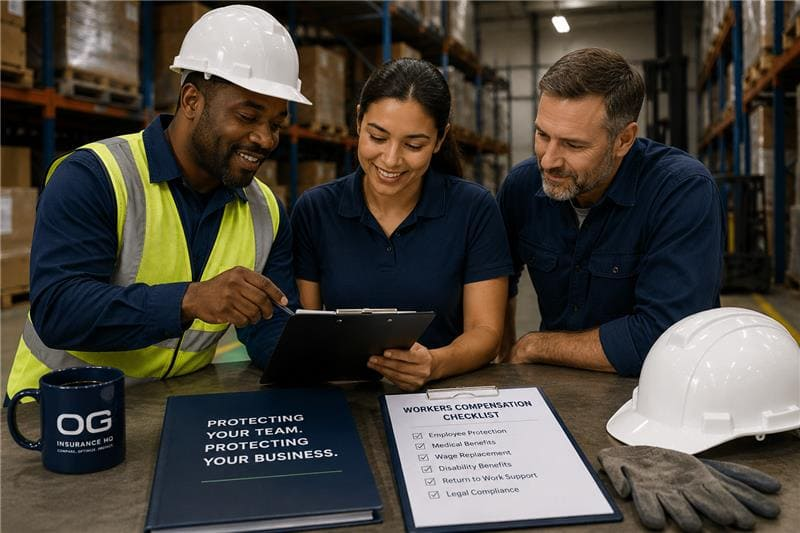
In nearly every state, workers compensation is not optional once you have employees. It is a legal requirement, and the protection it provides runs in both directions: it gets injured workers the medical care and wage replacement they need, and it shields employers from many workplace injury lawsuits in the process.
What Is Workers Compensation Insurance?
Workers compensation insurance provides medical benefits and wage replacement to employees who are injured or become ill as a direct result of their job. In exchange for that guaranteed coverage, employees generally give up the right to sue their employer for the injury, which protects the business from costly and unpredictable litigation.
A standard workers compensation policy typically covers:
- Medical expenses related to a work injury or occupational illness
- Wage replacement benefits while an employee recovers and cannot work
- Disability benefits for injuries resulting in temporary or permanent impairment
- Death benefits and funeral expenses in the event of a fatal workplace incident
- Employer’s liability coverage, which protects the business against related lawsuits that fall outside the standard workers compensation framework
Why Workers Compensation Insurance Matters
Workplace injuries happen more often than most business owners expect, even in industries that feel relatively low risk. Beyond the legal requirement in nearly every state, workers compensation insurance protects your business from the kind of lawsuit that could otherwise threaten its survival. A single serious workplace injury, without coverage in place, can produce medical bills, lost wage claims, and legal costs that easily reach into six figures.
There is also a workforce dimension to this coverage that is easy to overlook. Employees, especially in physically demanding industries, often look for evidence that an employer carries proper workers compensation coverage before accepting a position. It signals that a business takes its team’s wellbeing seriously, which can be a meaningful factor in hiring and retention.
Real World Example
A warehouse associate at a regional auto parts distributor herniated a disc in his lower back while lifting a heavy engine component off a top shelf without assistance. The injury required an MRI, physical therapy, and nearly two months away from work before he could return to full duty. The company’s workers compensation policy covered his full medical treatment and a portion of his lost wages during recovery, with the total claim reaching just over $52,000. Without that coverage in place, the warehouse owner would have faced the choice of paying those costs personally or risking a lawsuit that could have closed the business entirely. Because the policy was active, the employee received the care he needed and the warehouse continued operating without interruption.
Who Needs Workers Compensation Insurance?
Workers compensation requirements vary by state, but coverage is essential, and often legally mandated, for:
- Any business with one or more full-time or part-time employees
- Restaurants and food service operations with kitchen and serving staff
- Construction and contracting businesses with field crews
- Retail stores and warehouses with physical labor requirements
- Salons, gyms, and personal service businesses with staff
- Professional offices, even with relatively low physical risk, since most states still require coverage once employee thresholds are met
Common Workers Compensation Claims
The most frequent workers compensation claims include:
- Strains and sprains from lifting, repetitive motion, or overexertion
- Slip and fall injuries within the workplace
- Burns and cuts in kitchens, manufacturing, or industrial settings
- Repetitive stress injuries from extended computer or equipment use
- Vehicle-related injuries for employees who drive as part of their job
- Occupational illnesses tied to long-term exposure in certain industries
What Affects Workers Compensation Insurance Costs?
Workers compensation premiums are calculated primarily based on your payroll, the classification codes assigned to each employee’s job duties, your claims history, and your state’s specific rating rules. A roofing crew will carry a dramatically higher rate per payroll dollar than an accounting office, because the physical risk of the work itself is so different, even though both businesses might generate similar revenue.
According to Insureon, the median monthly cost of workers compensation for small businesses runs between roughly $45 and $70 per employee, though this figure swings significantly based on industry classification, with higher risk trades paying considerably more and low risk office environments often paying less.
How Your Experience Modifier Affects Your Rate
Most states use an experience modification factor, often called an e-mod, to adjust your workers compensation premium based on your business’s actual claims history compared to similar businesses in your industry. A clean claims history can lower your e-mod and your premium over time, while frequent or severe claims can push it higher. Building a genuine safety culture, addressing hazards proactively, and managing claims carefully when they do occur are some of the most effective ways to keep this number working in your favor year over year.
Frequently Asked Questions
Why Businesses Choose OG Insurance HQ
Your team keeps your business running, and the right workers compensation policy protects both them and you. OG Insurance HQ uses advanced analytics to classify your workforce accurately, compare rates across top carriers, and optimize your coverage to keep costs fair while keeping protection strong. Compare. Optimize. Protect.